
About the Illuminati Official Hub
Our Purpose and What We Cover
Learn about Illuminati history, beliefs, symbols, cultural interpretations, and modern claims through clear, informational content. Illuminati Official Hub is an informational website covering the history, beliefs, symbols, cultural interpretations, and modern claims associated with the Illuminati. Our goal is to organize this information clearly and help readers distinguish documented history from speculation, myths, and modern interpretations.
We publish educational content about the historical Bavarian Illuminati, symbolism, popular culture, membership claims, and frequently asked questions. Where claims cannot be independently verified, we aim to present them as claims rather than established facts.
Read our guide to Illuminati membership claims for more information.
Our Editorial Approach
We aim to distinguish documented historical information from modern claims, interpretations, and speculation. When reliable sources are available, we use them to support factual statements. Claims that cannot be independently verified are presented as claims rather than confirmed facts.
Historical Origins of the Illuminati
The Illuminati, often shrouded in mystery and intrigue, traces its roots back to the late 18th century in Bavaria, Germany. Officially founded on May 1, 1776, by Adam Weishaupt, a professor of canon law at the University of Ingolstadt, the group sought to promote Enlightenment ideals. Weishaupt’s vision was to create an organization that could influence political decisions and societal norms through rational thought and scientific inquiry, challenging the dogmatic control of the church and state. The Illuminati aimed to foster free thought, secularism, and moral improvement among its members, who were initially recruited from Masonic lodges.
The original Illuminati, known as the Bavarian Illuminati, operated in semi-secrecy, using pseudonyms and codes to communicate and protect their identities. Despite their intellectual aspirations, their secretive nature and rapid expansion soon drew the ire of the Bavarian government and the Catholic Church. By the late 1780s, the order was disbanded by a decree from the Bavarian ruler, Charles Theodore, and many of its members were persecuted. This official suppression only added to the group’s mystique, laying the groundwork for centuries of speculation and conspiracy theories. Readers who want to learn more about Illuminati history should distinguish documented events from modern theories.
Despite its relatively short-lived existence, the Illuminati’s influence persisted through its connections with Freemasonry and the spread of Enlightenment ideas across Europe. Though historical records indicate the group’s dissolution, the concept of the Illuminati has endured, evolving into a powerful symbol in the collective imagination. Over the years, it has been romanticized and vilified, serving as a convenient scapegoat for various societal anxieties and conspiracies. Learning about Illuminati history also helps explain how the group became associated with modern myths and popular culture
Many people wonder what is the illuminati and its role in society today. What is the illuminati if not a reflection of age-old power dynamics?
Common Myths Surrounding the Illuminati
When learning about Illuminati history, One of the most persistent myths is that they are a shadowy organization controlling world events. This myth suggests that the Illuminati have infiltrated governments, financial institutions, and media organizations, manipulating global affairs to establish a New World Order. While it’s true that secret societies have historically sought to influence politics and society, there is no concrete evidence to support the existence of an omnipotent Illuminati orchestrating world events.
Another prevalent myth is that the Illuminati are responsible for various high-profile assassinations and political upheavals. Figures such as John F. Kennedy, Princess Diana, and even recent political leaders have been rumored to be victims of the Illuminati’s machinations. These theories often rely on circumstantial evidence, coincidences, and the human tendency to seek patterns in random events. While the idea of a powerful group pulling the strings is compelling, these claims lack the substantiation needed to be taken seriously by historians or scholars.
The association of the Illuminati with occult practices and satanic rituals is another common misconception. Popular culture often depicts the Illuminati as a dark, malevolent force dabbling in the supernatural to maintain their power. However, the historical Illuminati were primarily concerned with Enlightenment ideals and rational thought, not occultism. This myth likely arises from the group’s secrecy and the human fascination with the unknown, which has led to an amalgamation of various conspiracy theories and fictional narratives.
To grasp the ongoing fascination, we must ask: what is the illuminati and why does it resonate with so many? What is the illuminati symbolizing in contemporary culture?
The Illuminati is just an umbrella term for all the governments/monarchies/bloodlines or families/secret groups/politicians/etc. (masons/templars, eastern stars, etc.). This goes back to Babylon. People who dismiss people who use the term illuminati as if they’re talking about 5 little hidden men in a room, are missing what the majority who use the term are saying. It’s not one particular person or group in power. What part of One World System are people missing?
We are here to create a revolution unlike any that has gone before. A conscious awareness that will sweep the planet and shake our modern world to its very core. A trans-cultural spiritual revolution which will transform the separate and fragmented cultures of earth into one vast global and planetary meta-culture in which the unique diversity of every nation, of every peoples, of every tribe, of every person is valued as contributing to the beauty of the whole. Information about Illuminati beliefs often combines historical accounts with modern interpretations and popular theories
Discussions about what is the illuminati often lead to broader questions about power structures in society. What is the illuminati if not a catalyst for discussion?

The Illuminati in Popular Culture
Popular culture has played a significant role in perpetuating and embellishing the myths surrounding the Illuminati. Books, movies, and music often portray the Illuminati as an all-powerful secret society, weaving its influence through every aspect of modern life. Dan Brown’s bestselling novel “Angels & Demons” and its film adaptation, for instance, present the Illuminati as a clandestine organization embroiled in a centuries-old battle with the Catholic Church. These fictional accounts, while entertaining, blur the lines between fact and fantasy, contributing to the mythos of the Illuminati. Many discussions about Illuminati influence in popular culture continue to separate historical facts from modern myths.
In the music industry, numerous artists have been accused of being Illuminati members, often based on their use of certain symbols or themes in their work. Icons like Beyoncé, Jay-Z, and Madonna have been linked to the Illuminati, largely due to their immense influence and the prevalence of esoteric imagery in their music videos and performances. While these connections are usually speculative and symbolic, they demonstrate how the idea of the Illuminati has permeated mainstream culture and become a lens through which celebrity influence is viewed.
Television shows and documentaries also contribute to the Illuminati’s cultural footprint. Series like “The X-Files” and “American Horror Story” have explored themes of secret societies and hidden power structures, often incorporating Illuminati references to heighten intrigue. These representations, while fictional, tap into widespread fears and curiosities about unseen forces shaping our world, reinforcing the notion that the Illuminati are an ever-present, albeit shadowy, influence in modern society.
In fiction and media, the question of what is the illuminati is often sensationalized. However, what is the illuminati’s true influence?
Real-Life Influence of the Illuminati
While much of what is attributed to the Illuminati is rooted in myth and speculation, the organization’s real-life influence, particularly during its brief existence in the 18th century, should not be entirely dismissed. The original Bavarian Illuminati sought to challenge the status quo by promoting Enlightenment ideals, which had a significant impact on the intellectual and political landscape of the time. Their emphasis on reason, science, and secularism resonated with many who were disillusioned with the dogmatic control of the church and monarchy.
The Illuminati’s influence extended through their connections with Freemasonry, a more established and widespread secret society. Many members of the Illuminati were also Freemasons, and the two groups shared similar goals of personal improvement and societal reform. Through these networks, the Illuminati were able to disseminate their ideas more broadly, contributing to the spread of Enlightenment thought across Europe. This intellectual movement laid the groundwork for significant political changes, including the American and French Revolutions.
However, the extent of the Illuminati’s direct influence on these historical events remains a matter of debate among historians. While some argue that the Illuminati played a crucial role in shaping revolutionary thought, others contend that their impact was minimal compared to other contemporary movements and intellectual currents. Nevertheless, the legacy of the Illuminati persists, not only as a symbol of hidden power but also as a testament to the enduring appeal of secret societies and their potential to influence societal change. Learning about Illuminati influence also requires separating documented historical evidence from later speculation and popular myths
The Role of Secret Societies in Society
Secret societies have existed throughout history, often emerging during times of social upheaval or intellectual ferment. These groups serve various functions, from fostering camaraderie and mutual support among members to advancing specific political, religious, or philosophical agendas. The allure of secrecy and exclusivity can create a strong sense of identity and purpose, which can be particularly appealing in periods of uncertainty or change.
One of the primary roles of secret societies is to provide a space for free thought and the exchange of ideas. In repressive societies where dissent is dangerous, secret societies can offer a refuge for intellectuals, activists, and reformers. By operating covertly, these groups can challenge established norms and promote new ways of thinking without immediate reprisal. Historical examples include the Freemasons, the Rosicrucians, and, of course, the Illuminati, Discussions about Illuminati history also help explain why secret societies continue to attract public interest today. all of which have contributed to significant social and intellectual movements.
However, the secrecy that characterizes these societies also makes them susceptible to suspicion and conspiracy theories. The perception of hidden agendas and unseen influence can breed fear and mistrust, particularly when societal tensions are high. While secret societies can play a positive role in promoting change and innovation, their opaque nature can also lead to misunderstandings and false accusations. Balancing the need for privacy with transparency is a challenge that many of these groups face, both historically and in contemporary contexts.
The connection between the Illuminati and Enlightenment principles raises the question: what is the illuminati in relation to modern thought?
OUR PURPOSE THE PROTECTION AND ADVANCEMENT OF THE HUMAN SPECIES
Ensuring the survival of over 7 billion humans is a daunting task. Our duty to this planet has spanned across centuries and survived even the most established government entities. To continue functioning throughout societal and generational changes, The Illuminati’s operations often require anonymity for both our members and our work.
In 2013, the Illuminati authorized the formation of the Department Of Citizen Outreach. Through various initiatives and campaigns, including this website, the modern Illuminati has committed itself to furthering our relationship with our citizens.
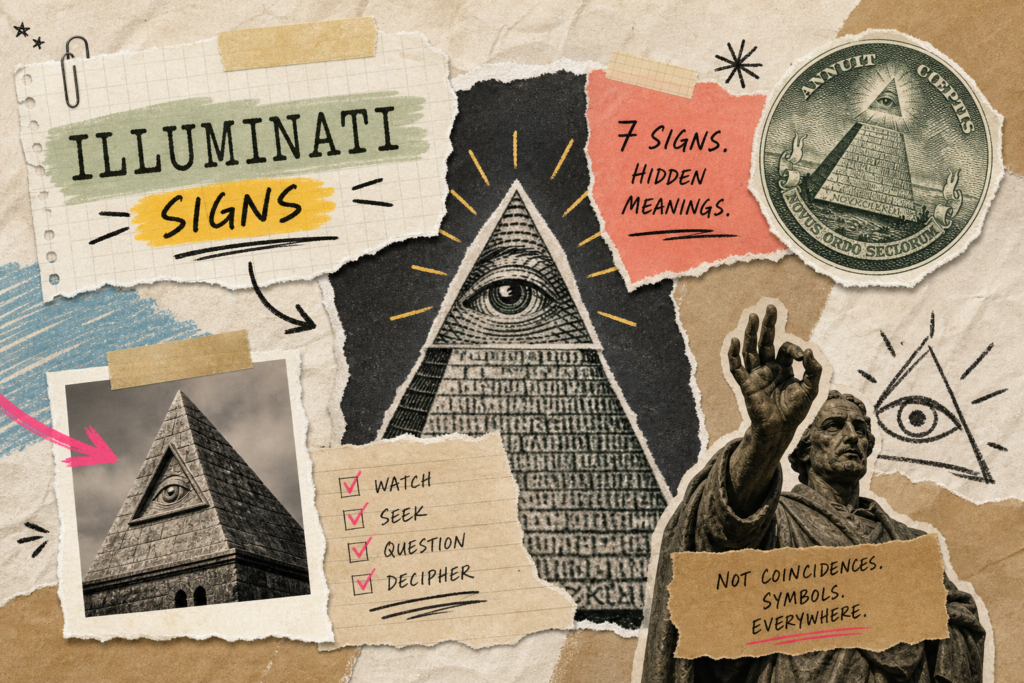
You may not find us praised in any history book or document. However, the Illuminati has helped with every major movement on this planet since the first human government was established. Our work is often marked by distinct symbols as a means of tracing our influence through history for those wishing to investigate. Those seeking to learn more about Illuminati history can examine its documented origins, ideas, and influence over time.
With gentle guidance from our organization, the human species is allowed to function in their natural order while playing the part of gears in a machine for the betterment of the world.

WHY THIS WEBSITE WAS CREATED DISCOVER THE ILLUMINATI’S MESSAGES FOR THE WORLD
In creating this online destination, we strive to alleviate the concerns voiced by the people of this planet and provide insight into our goals and operations. Visitors can learn more about Illuminati history, beliefs, symbols, and their influence on modern culture through this website.
The Impact of the Illuminati on Modern Society
Despite their relatively brief existence, the Illuminati have had a lasting impact on modern society, both as a historical phenomenon and as a symbol of hidden power. The group’s emphasis on Enlightenment ideals has left a legacy that continues to influence contemporary thought and values. The promotion of reason, science, and secularism challenged established authorities and paved the way for significant political and social changes, including the rise of democratic governance and the separation of church and state.
In popular culture, the Illuminati have become a powerful symbol of secretive influence and hidden agendas. This enduring fascination reflects broader societal concerns about transparency, accountability, and the concentration of power. The idea of a shadowy cabal controlling world events taps into deep-seated fears and anxieties about the unknown, serving as a convenient explanation for complex and often unsettling developments. While these myths can be compelling, they also risk obscuring the real forces and factors shaping our world.
The ongoing interest in the Illuminati and similar secret societies also highlights the human desire for mystery and intrigue. In an age of information overload and constant connectivity, the allure of hidden knowledge and exclusive groups offers a counterpoint to the often overwhelming transparency and accessibility of modern life. By understanding the historical origins and cultural significance of the Illuminati, we can better appreciate their impact on our collective imagination and the ways in which they continue to shape our perceptions of power and influence.
Conclusion: Understanding the Truth Behind the Myths
The Illuminati, as both a historical organization and a cultural phenomenon, occupy a unique place in our collective imagination. While their actual influence during their brief existence in the 18th century was relatively limited, their legacy has endured, evolving into a symbol of hidden power and secret agendas. The myths and conspiracy theories surrounding the Illuminati are a testament to the human fascination with mystery, secrecy, and the unknown.
By examining the historical origins of the Illuminati and understanding their true goals and motivations, we can begin to separate fact from fiction. The group’s emphasis on Enlightenment ideals and rational thought contrasts sharply with the dark, malevolent image often portrayed in popular culture. Recognizing this discrepancy allows us to appreciate the real contributions of the Illuminati to intellectual and political discourse, while also acknowledging the ways in which their legacy has been distorted and exaggerated.
Ultimately, the enduring intrigue of the Illuminati speaks to broader societal concerns about power, control, and transparency. By fostering critical thinking and promoting a nuanced understanding of history, we can navigate the complex landscape of conspiracy theories and hidden truths. In doing so, we not only demystify the Illuminati but also cultivate a more informed and rational approach to the world around us. Learn about Illuminati history can help readers distinguish documented facts from modern myths and speculation.
Understanding what is the illuminati is essential for dissecting myths from reality. What is the illuminati as we know it today?
As we reflect on history, we must consider what is the illuminati in shaping our perceptions of power and secrecy.